
The Weight of the Land
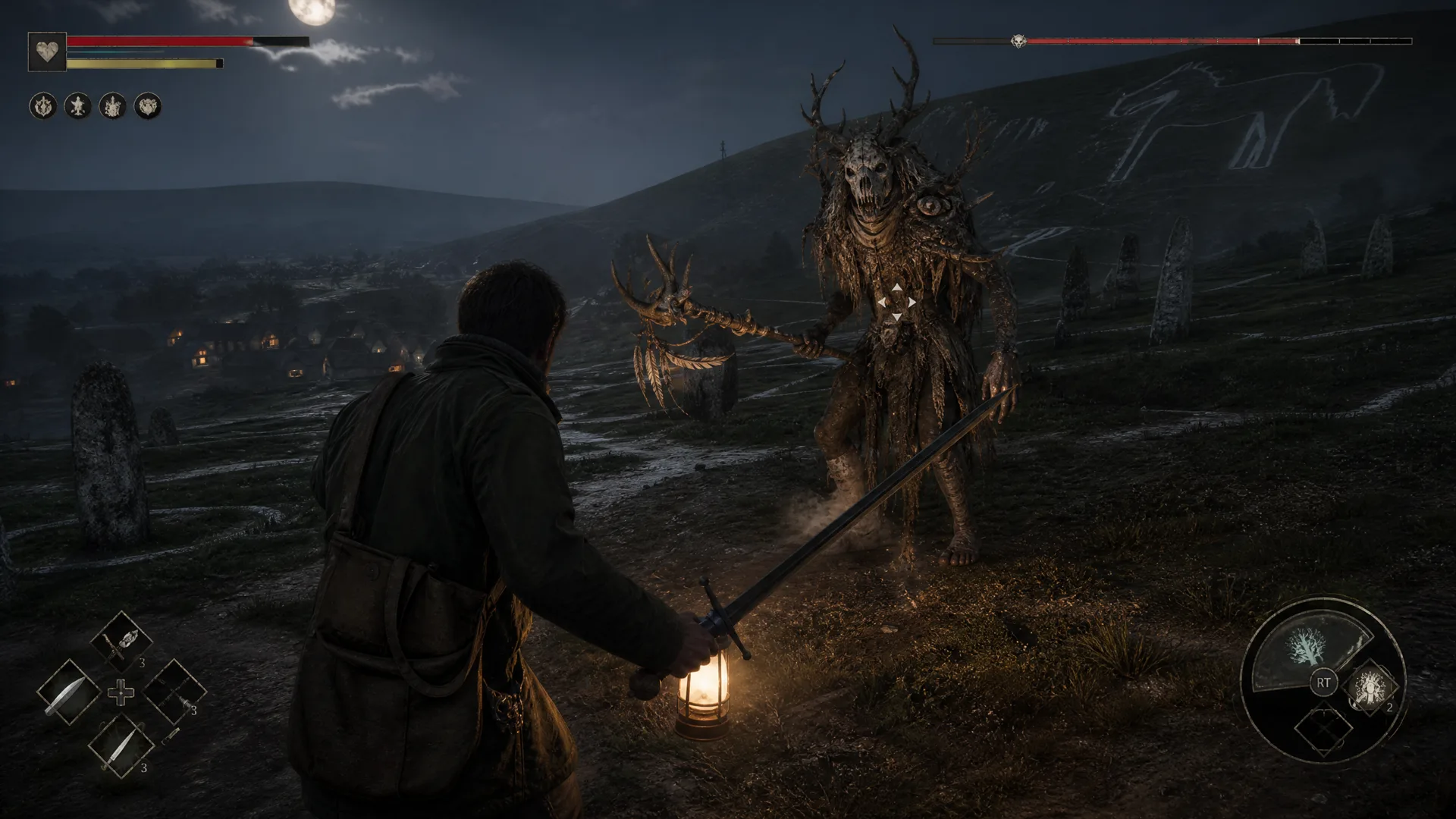
In the quiet, brooding expanse of an English chalk hillside, Chalk Horse carves out a distinct identity within the action RPG genre. This third-person folk-horror adventure is not merely about traversing a map; it is a profound exploration of a landscape that feels actively hostile. The game immerses players in an atmosphere thick with dread, where every gust of wind feels like a warning from the earth itself. The developers have meticulously crafted an environment that serves as both the primary antagonist and a silent storyteller.
The pacing is deliberate, demanding patience and observation. Unlike the frenetic energy found in many of its contemporaries, Chalk Horse requires players to move with caution, respecting the treacherous terrain and the ancient entities that inhabit it. The presentation is suitably grim, employing a muted colour palette that emphasises the stark nature of the chalk downs. The visual design is complemented by an evocative soundscape that relies on ambient noise and discordant strings to build tension.
Mastering the Directional Combat
At the heart of the gameplay loop lies a demanding directional combat system that punishes haste and rewards calculated precision. Players must carefully manage their stamina, a resource that depletes rapidly with every swing, block, and dodge. The combat mechanics require a deep understanding of positioning and timing, as attacks must be angled correctly to bypass enemy defences. This system transforms every encounter into a tense duel, where a single misstep can lead to a brutal demise.
The introduction of weapon arts adds a layer of complexity to the skirmishes. These specialised techniques, tied to the various historical armaments scattered throughout the hillside, offer powerful but stamina-intensive options for breaking an opponent's guard. Mastering these arts is essential for survival, particularly when facing the more formidable denizens of the downs.
Crucially, the enemy posture system forces players to maintain an offensive rhythm. Landing consecutive blows whittles down an adversary's balance, eventually opening them up for a devastating critical strike. However, hesitation allows the enemy to recover, prolonging the engagement. This dynamic encourages a balanced approach, blending aggressive flurries with defensive manoeuvres.
Navigating the Village Routes
Exploration in Chalk Horse is an intricate affair, centred around a network of ancient village routes that crisscross the undulating landscape. These paths are complex navigational puzzles that require careful study. The level design is remarkably cohesive, presenting a world that feels organic. Players must learn to read the environment, using landmarks and subtle topographical shifts to orient themselves in a setting where modern conveniences like mini-maps are conspicuously absent.
The routes themselves are fraught with peril, often leading through narrow defiles or along precarious chalk cliffs where a single misstep can be fatal. The environmental storytelling shines in these transitional areas, with abandoned settlements offering silent testimony to the region's dark history. These areas also serve as natural bottlenecks, forcing players into claustrophobic encounters.
Furthermore, the game actively discourages mindless wandering. The environment is peppered with subtle traps and natural hazards that demand constant vigilance. Navigating the village routes is a slow, methodical process that reinforces the overarching theme of vulnerability.
The Enigma of the Standing Stones
Scattered across the bleak hillsides are the standing stones, monolithic structures that serve as both narrative anchors and mechanical focal points. These ancient megaliths are deeply tied to the folk-horror aesthetic, radiating an unsettling aura. They are not merely decorative; interacting with these stones is essential for progression, often unlocking new pathways or altering the environment in subtle ways.
The puzzles associated with the standing stones are environmental in nature, requiring players to manipulate light, shadow, and the very earth itself to reveal their secrets. These challenges are seamlessly integrated into the landscape, avoiding the artificiality that often plagues puzzle design in action RPGs. Solving these enigmas provides a satisfying intellectual counterpoint to the visceral demands of the combat.
Additionally, the standing stones function as the game's sparse checkpoints, offering a fleeting sanctuary in a hostile world. Reaching one of these monoliths provides a profound sense of relief, a brief respite where players can tend to their wounds and prepare for the trials ahead.
Surviving the Elements and Status Effects
The environment in Chalk Horse is as deadly as any blade, and the game's status effect system brilliantly reinforces this harsh reality. The weather is a constant adversary, with driving rain and biting winds actively hindering the player's progress. Exposure to the elements can lead to a variety of debilitating conditions, from a gradual sapping of stamina to a severe reduction in combat effectiveness.
The folk-horror setting introduces unique, thematic status effects that go beyond traditional poisons and burns. Afflictions such as 'Blight' and 'Hysteria' can dramatically alter the gameplay experience, distorting the player's vision or causing erratic behaviour in combat. Managing these conditions requires the careful application of rare, locally sourced remedies.
The interplay between the environment and these status effects creates a deeply immersive survival experience. A sudden downpour is not just a visual flourish; it is a tactical consideration that can drastically alter the outcome of an encounter. This holistic approach ensures that the landscape is always a primary concern.
Accessibility and Technical Performance
While Chalk Horse is unapologetically demanding, the developers have made commendable strides in accessibility, ensuring that the game's challenges remain fair rather than frustrating. A suite of customisable options allows players to tailor the experience to their needs, without compromising the core design philosophy.
- Customisable subtitle sizing and high-contrast background options.
- Adjustable timing windows for parries and defensive manoeuvres.
- Toggleable visual indicators for environmental hazards and status effects.
- Comprehensive remapping for all controller inputs.
On the technical front, the game performs admirably, maintaining a stable frame rate even during the most frantic encounters. The chalk hillside is rendered with a striking attention to detail, and the dynamic lighting engine effectively captures the oppressive atmosphere of the setting. While minor visual glitches occasionally break the immersion, they are infrequent.
A Landscape That Remembers
Ultimately, Chalk Horse succeeds by delivering a cohesive, atmospheric experience that seamlessly blends narrative and mechanics. The directional combat and stamina management demand a level of engagement that elevates every encounter, while the intricate village routes and environmental puzzles reward careful exploration. It is a game that does not hold the player's hand, instead offering a brutal, uncompromising journey through a beautifully realised folk-horror setting.
The synthesis of the enemy posture system, weapon arts, and the ever-present threat of status effects creates a gameplay loop that is both challenging and deeply satisfying. The standing stones and the oppressive landscape itself serve as constant reminders of the game's unique identity, a stark departure from the familiar tropes of the genre.
For those willing to brave the chalk hills and confront the ancient terrors that dwell there, Chalk Horse offers an unforgettable action RPG experience. It is a testament to the power of environmental storytelling and rigorous mechanical design, a bleak and beautiful masterpiece that will linger in the memory long after the final blow has been struck.