
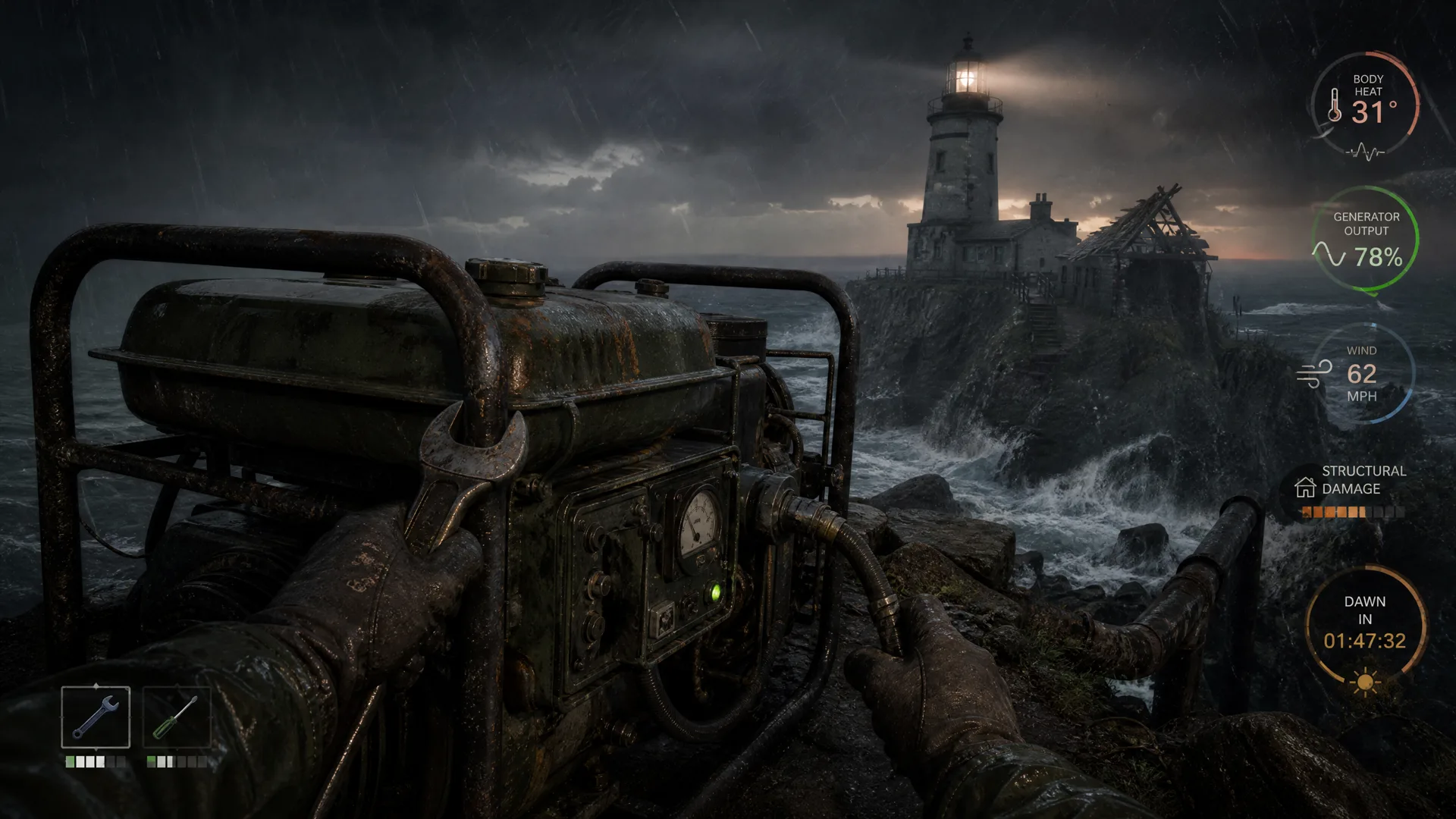
A Long Night in Bad Weather
There is a distinct kind of dread that accompanies the howling wind on the North Sea coast. In The Last Keeper at Rook Head, developed by the fictional yet evidently talented studio Saltwick Games, this dread is not merely atmospheric; it is a tangible, aggressive force that seeks to dismantle everything you are tasked with protecting. As a first-person lighthouse survival experience, the game isolates you on a remote, battered headland with a singular, exhausting objective: keep the light burning until dawn.
This is not a game of grand heroics or supernatural terrors. Instead, it is a meticulously crafted simulation of endurance against the elements. The premise is deceptively straightforward, yet the execution is anything but simple. You are thrust into the worn boots of a solitary keeper, armed only with a dwindling supply of fuel, a temperamental generator, and an assortment of limited tools that always seem one strike away from breaking. The countdown to dawn ticks away in the corner of your screen, a constant reminder of how much longer you must survive the relentless onslaught of the storm.
The Anatomy of the Storm
At the heart of the game's mechanics is the delicate balance between body heat, generator output, and structural integrity. The storm outside is not just a visual spectacle; it is a complex system that directly impacts your survival. Wind direction and intensity dictate which parts of the lighthouse are most vulnerable, requiring you to constantly monitor the weather gauges and anticipate the next breach. When the wind shifts, the structural damage follows, often necessitating immediate, perilous exterior repairs.
Stepping outside the relative safety of the lighthouse interior is where the game's tension peaks. The controls are intentionally weighty, simulating the difficulty of moving against gale-force winds. You must physically push against the elements to reach damaged shutters or failing external mechanisms. During these excursions, your body heat plummets rapidly. The longer you spend wrestling with a jammed pulley or patching a shattered pane, the closer you edge toward hypothermia. It is a brutal economy of time and warmth, where hesitation can be fatal.
Keeping the Lights On
Inside, the primary focus is the generator, a rusted, temperamental beast that demands constant appeasement. Fuel is finite and scattered throughout the lower levels of the lighthouse, requiring you to abandon your post at the lantern room to retrieve it. This introduces a brilliant pacing dynamic. You must judge exactly how long you can leave the light unattended before the generator sputters and dies, plunging the headland into darkness and resulting in an immediate failure state.
The generator's output is tied directly to the efficiency of your repairs and the quality of the fuel you use. Mixing damp coal with dry wood might keep the fire going for a few more minutes, but it produces less power, dimming the light and increasing the risk of maritime disaster. This systemic interplay means that a failure in one area cascades rapidly into others. A broken window lowers the interior temperature, which forces you to burn more fuel to maintain your body heat, which in turn leaves less fuel for the generator.
Tools of the Trade and Isolation
Your inventory in The Last Keeper at Rook Head is severely restricted, forcing you to think creatively about problem-solving. There are no magical upgrades or bottomless pockets; you have a toolbelt that holds exactly four items. A heavy wrench, a roll of canvas, some sturdy nails, and a lantern are often all that stand between you and the abyss. The physical interaction with these tools is highly tactile. You must manually align the wrench, hold the canvas taut, and strike the nails with precise timing.
The lighthouse itself is a masterclass in claustrophobic level design. It is a vertical labyrinth of spiral staircases, cramped storage rooms, and narrow gantries. The layout forces you to constantly traverse its height, moving from the cellar where the fuel is stored to the lantern room at the apex. This verticality is not just a spatial challenge; it is a physical one. Running up and down the stairs consumes stamina and accelerates the loss of body heat, forcing you to plan your routes with utmost efficiency.
A Symphony of Despair
Aesthetically, the game leans heavily into a muted, oppressive colour palette. The North Sea is rendered in churning greys and blacks, illuminated only by the sweeping, desperate beam of your own light. The interior of the lighthouse is cast in harsh, flickering shadows, making it difficult to spot essential items or assess the extent of the damage during a power fluctuation. This deliberate obfuscation heightens the sense of panic when things go wrong.
To survive the night, you must internalise the following critical priorities:
- Never leave the lantern room without a full toolbelt, as returning for a forgotten wrench wastes vital minutes.
- Prioritise windward repairs; a breach on the leeward side can often wait until the immediate squall passes.
- Maintain a reserve of high-quality coal near the generator for emergency rapid-heating when the fire dips dangerously low.
- Monitor your body heat before attempting exterior repairs; hypothermia slows your movement and repair speed significantly.
The Dawn Approaches
As the countdown to dawn inches closer to zero, the game fundamentally shifts its pacing. The storm reaches its crescendo in the final hour, unleashing a relentless barrage of wind and rain that tests every system in the lighthouse simultaneously. It is here that the culmination of your previous decisions becomes apparent. If you have been diligent in your repairs and frugal with your fuel, you might just have enough resources to weather the final assault. If you have been careless, the end comes swiftly and brutally.
This final sequence is an exhausting, exhilarating test of endurance. You are forced to abandon long-term strategy in favour of desperate, short-term survival. Windows shatter, the generator screams, and your body heat plummets as you scramble to plug the holes in a sinking ship. The sheer intensity of these final moments makes the eventual arrival of dawn—a pale, weak light breaking through the storm clouds—feel like a profound, hard-won salvation.
A Resounding Success
The Last Keeper at Rook Head is a triumph of focused, systemic game design. It takes a simple premise and executes it with such rigorous attention to detail that it elevates the survival genre beyond mere resource gathering. The interplay between body heat, structural integrity, and the temperamental generator creates a constantly shifting web of priorities that demands your absolute concentration.
While the weighty controls and punishing difficulty curve may alienate those looking for a more relaxed experience, they are essential components of the game's oppressive atmosphere. The fictional Saltwick Games has crafted an experience that is as mechanically sound as it is atmospherically terrifying. It is a game that respects your intelligence and punishes your mistakes, offering a deeply satisfying, albeit exhausting, challenge.